The Victoria Transit Riders Union (VTRU) is marking this Labour Day weekend with a rally in downtown Duncan from 10am-1pm on Saturday, August 30th to support Cowichan Valley transit workers and demand a fair and just end to the dispute that has halted regular bus service in the region for over 200 days.
The rally – which VTRU has organized in cooperation with transit riders and workers in the Cowichan Valley – also aims to push the BC NDP to end the practice of contracting out supposedly “public” transit system operations to private, for-profit companies like Transdev (the multinational corporation that manages the Cowichan Valley Regional District transit system and many others across the province).
Rally attendees will gather in Duncan by the train station in Charles Hoey Park. Because there is almost no transit service between Victoria and Duncan (strike or no strike), VTRU has chartered the Community Action Bus to transport people to the rally from Victoria and back. The bus will be leaving from Working Culture Bakery (2506 Douglas) at 9am and returning to the same location by 2pm. All are welcome to join.
The ongoing Cowichan Valley bus strike is the longest in BC history. The workers want safe, clean toilets and wages closer to those of transit workers in Victoria and Nanaimo. Transdev continues to refuse these demands. Many transit riders in the Cowichan Valley have been forced into car dependency as a result; many others – particularly poor and mobility-challenged people – have been left stranded, isolated, and desperate.
“No transit system in BC should ever have been contracted out, let alone to a multinational corporation like Transdev”, said Liz Cronin, VTRU organizing committee member. “Public transit is a critical service and the BC NDP needs to bring all systems into the public realm, make a fair deal with the workers, and get the buses in the Cowichan Valley running again.”
“As transit riders we stand with the striking workers, because their dignity and welfare is inseparable from ours”, said Nathan Bird, rally organizer and VTRU organizing committee member. “Transdev wants to pit us against them, but we want our bus drivers to have full bellies and empty bladders, and not vice versa.”
“The Cowichan Valley is geographically bigger than Metro Vancouver and has population on par with New Westminster, yet the Provincial government has not properly funded nor supported public transportation outside of the Lower Mainland”, said Carolyn Ronald, a Cowichan Valley transit advocate who helped organize the rally. “It is projected that Vancouver Island will soon have 1 million residents, so it shouldn’t be treated as an afterthought and left stuck with bad policy and gridlock.”
“Why has this transit strike lasted more than 200 days without the real decision makers in transit helping resolve this dispute fairly for both workers and the public?”, wonders Michelle de Vries, striking Cowichan Valley bus driver.
VTRU calls on the provincial government to act swiftly and decisively to ensure a resumption of transit service and a fair deal for transit workers in the Cowichan Valley. Ultimately the group wants transit to be public – meaning publicly-owned and operated, and fare-free (like public libraries and public parks).
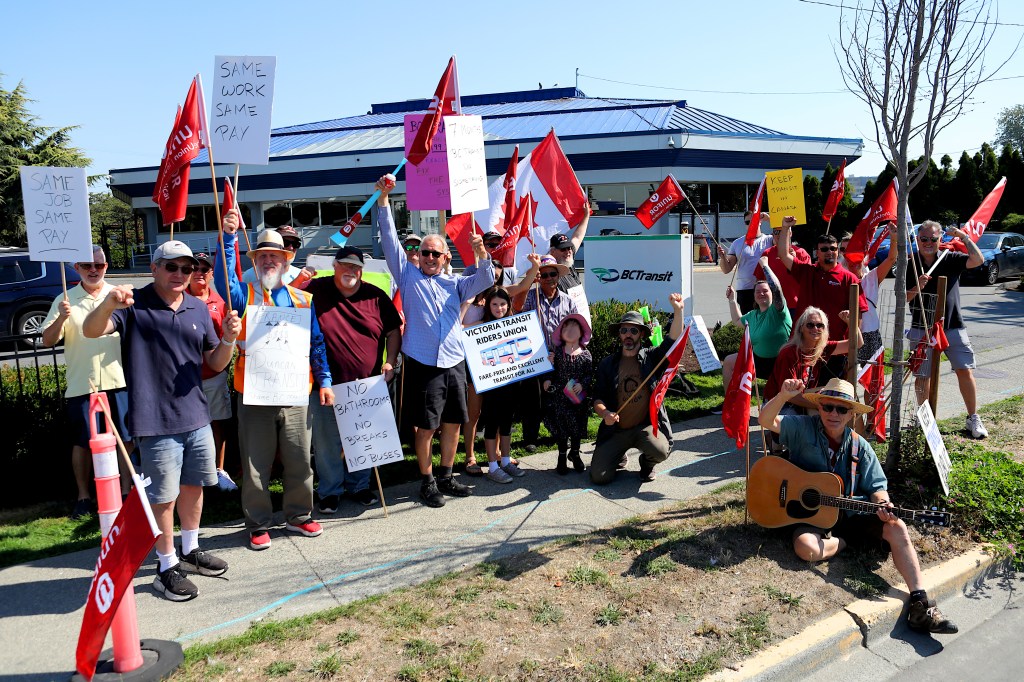
VTRU members and other supporters rally with striking Cowichan Valley transit workers at the BC Transit bus yard on August 25th, 2025.
Quick Facts:
- In addition to managing transit in the Cowichan Valley, Transdev also manages HandyDART service in Victoria, which has been heavily criticized by users for inconvenience and unreliability.
- In the second-longest bus strike in BC history – the 2022 Sea-to-Sky strike, which lasted for 136 days – the employer was also a private contractor: in this case, PW Transit. PW Transit was also involved in the 2-month-long 2023 Comox Valley bus strike.
- According to Oxfam, billionaires cause more carbon emissions in a few hours than the average person does over the course of their entire life.
- Orangeville, Ontario eliminated transit fares in 2023, increasing transit ridership by 150-160%.
 Victoria Transit Riders Union